
What can failure in a video game teach us about leadership?
Interesting leadership insights from the latest drama in the streaming world

Welcome to a special edition of Positively Powerful, a weekly newsletter about leadership, personal development, business, internet culture, and the journey of becoming your most interesting, happy, and powerful self.
Disclaimer

In this post I talk about individuals and their actions in a way that I normally would never do without them in the room. I feel it is okay in this case since all events discussed herein are streamed, viewed, and discussed in public for tens of thousands of viewers.
I’d bet that many of you don’t know just how large and influential the gaming community is. As someone who exists at the intersection of business, content creation, and gaming, I think recent events in the gaming world have some interesting leadership insights we can learn from.
To understand the context of what has happened you first need some background. I’ll keep it as brief as I can.
World of Warcraft
The game being played is World of Warcraft (WoW), a multiplayer online role-playing game where you create a character, battle monsters, level up, and find increasingly more powerful weapons and items. WoW is arguably one of the most influential and successful games ever created, with a peak of 12 million monthly subscribers at $15 USD each, and still going strong 20 years after release.
The game is highly social, and rewards cooperative team play. I myself have over 500 full days (500*24 hours) in the game and have met some of my best real-life friends in WoW.
Going Hardcore
There are several different versions of World of Warcraft:
Retail (the latest version of WoW).
Classic (the original 2004 release of the game).
Season of Discovery (Classic with modifications).
Classic Hardcore (Classic with permadeath. If your character dies, you have to start over with nothing).
The version we are covering today is Classic Hardcore. Playing your character to level 60 (the max level in Classic) takes between 60 hours for the best speedrunners, and up to 150 hours for casual players. If you get that far.
The slightest mistake can be devastating. Looking in the wrong direction at the wrong time can allow enemies to sneak up on you from behind. Not knowing that, on this particular road, a high-level monster can run up to your character and kill it with one strike. Boom. Weeks of playing is lost.
The stakes are high. But that’s the charm of Hardcore.
Streaming
Have you noticed the surge in live-streaming these last 15 years? Millions of people have replaced watching TV with participating in streamer communities. Instead of passively watching pre-recorded shows, you watch someone whose personality you like. You watch them play video games, cook, study, travel—anything, really. It is quite engaging, almost like hanging out with a friend, just chilling, with no plans or expectations.
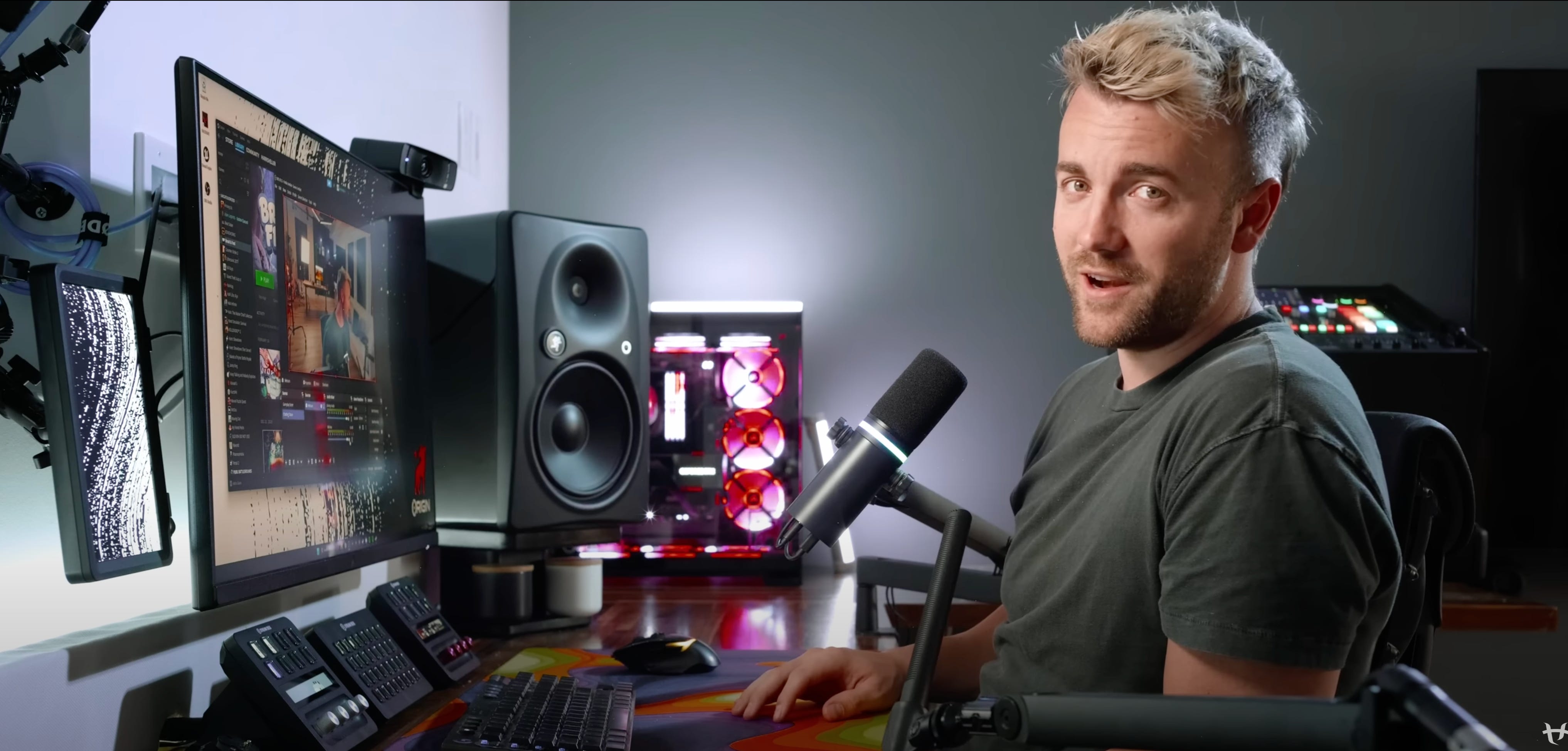
If you haven’t tried it, you should. Watching the latest Apple event yourself is one thing. Watching it together with a streamer and the community while getting live reactions and commentary. It’s way more fun.
OnlyFangs
World of Warcraft has guilds, which are essentially players forming teams (or companies) in the game. The guild works together to achieve common goals, such as beating the most difficult bosses.
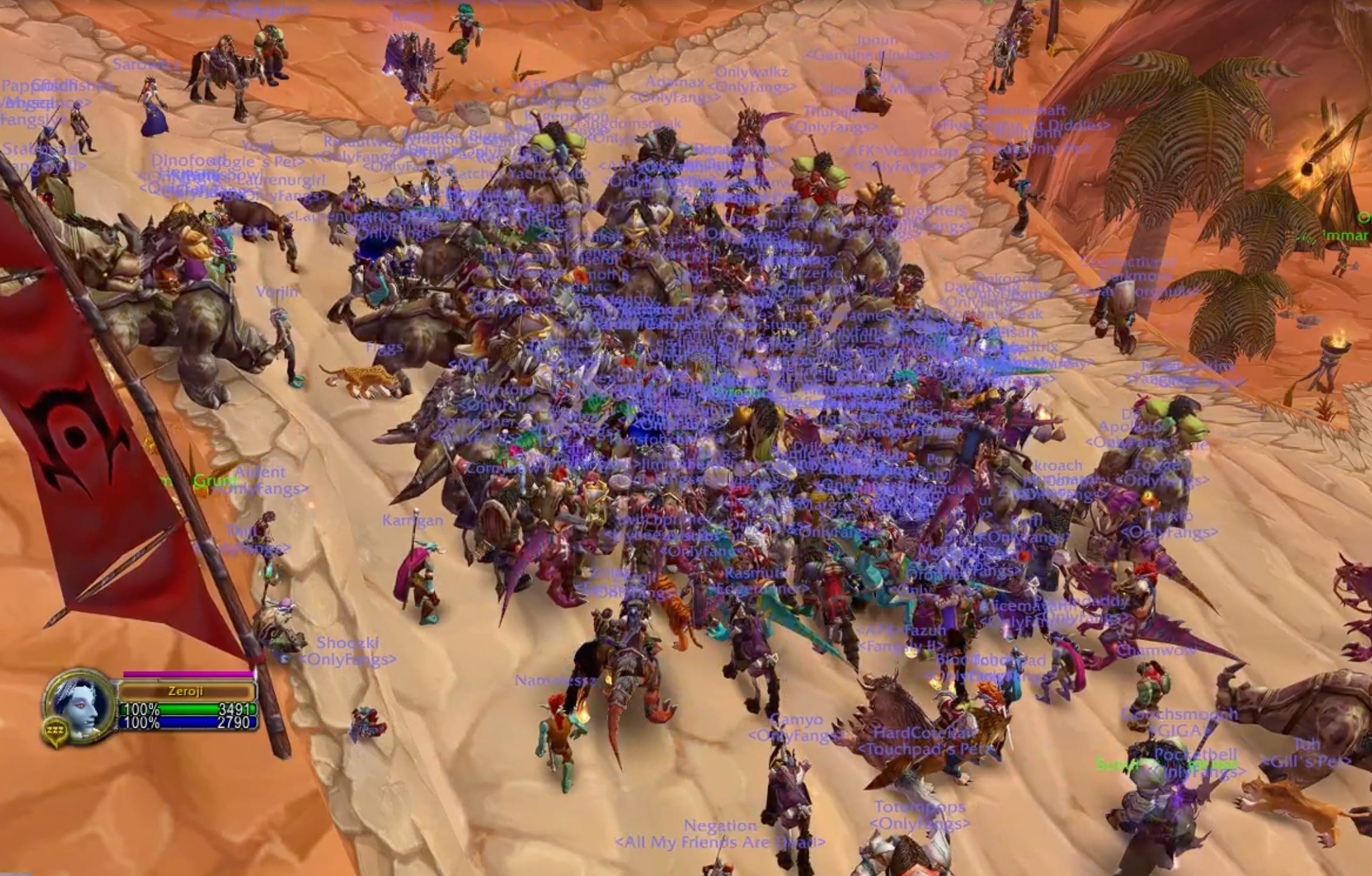
OnlyFangs (a joking reference to OnlyFans), started by Sodapoppin and Mizkif, is a guild where only streamers are invited to play. Arbitrary rules, events, meetings, punishments, drama, and role-playing are added to create a dynamic show where the viewers can follow the adventures of the streamers they like. And bond together against the streamers they don’t like.
You could compare it to watching Survivor on static TV, only much more engaging.
“Content”
In the creator economy, everything revolves around having engaging content to get attention, clicks, and views. Compare having a company meeting in your office vs having a company meeting at McDonald’s in Grand Central Station. One is probably “good content”, and the other is not.
Some people do anything, even to the detriment of themselves and others, to get content out of it.
OnlyFangs is a content machine with millions of people watching. Big business.
The Event
Okay, the context is out of the way, what drama are we talking about? And why is it interesting to me as a connoisseur of leadership?
After 30 years in tech and 15 years as a CTO, I see this as an incident, incident response, and corresponding aftermath.
Let’s walk through the timeline. I'm creating a fictional company scenario to make it a bit easier to follow along. Let me know if it was helpful or not.
Setting the scene
Five level 60 players from OnlyFangs are doing a dungeon, essentially going to a certain location in game to beat up a bunch of bosses in search of better items for their characters. The enemies in the dungeon are more dangerous than in the outside game world, requiring some level of team play to succeed. If someone dies, they have to start again from the beginning, invalidating hundreds of hours of work.
Equivalent company scenario
A small team in our company is working together to make important changes to our main database. If the database changes fail, the whole system goes down, preventing our customers from using our service and damaging our morale, finances, and reputation.
The incident
The players approach several groups of enemies, followed by a medium-difficulty boss. They talk about unrelated things and are clearly not focused on the game.
One of the main gameplay mechanics of WoW is aggro range. How far from an enemy can you be without them attacking you? When one of the players, Ozyfell, engages the first group of enemies, a second group of enemies (partly hidden from view) also engages because they are too close.
Fighting two groups of enemies at once is not uncommon; the players should handle it. What escalates the situation is that while they are fighting the first two groups, the boss also walks in and gets pulled into the fight.
The players realize the severity of the situation and call:
-“RUN! RUN! RUN!”
Equivalent company scenario
John, an experienced software engineer, is making the final changes to prepare for the release of the database changes. Around him, the team is getting ready for the Christmas party. John finishes his work and pushes the updated code to the production environment, excited about celebrating with his friends.

What John didn’t know is that the production database is not ready for the new update. A critical configuration flag has not been changed correctly in production.

Within minutes, their dashboards starts flashing red, indicating that something is wrong with the system. A critical issue is escalated, all hands on deck.
Incident response
The players start moving back toward the entrance of the dungeon while using their spells and abilities to stay alive.
Three players, Ozyfell, Snupy, and Sara, run together in a controlled group with tight communication. Ozyfell tries to have all the enemies hit him while Sara uses healing spells to keep him alive.
Two players, Yamdef and Pirate, run ahead.
Communication becomes stressed.
After a few seconds, voices can be heard saying,
-“Heal him!”
and
-“Come back a little bit!”
indicating that the players need help to stay alive.
Yamdef and Sara turn around to help the other players while Pirate keeps running toward the exit.
Communication becomes more desperate.
When Pirate is challenged on why he’s running, he says he’s not able to help because he has used all of his mana (which he use to cast spells).
Pirate runs out.
Sara and Snupy die (o7).
Yamdef runs out.
Ozyfell barely makes it out.
If you want to see the video yourself, here it is, from Yamdef’s perspective: https://www.twitch.tv/videos/2351220534?t=7h0m57s
Equivalent company scenario:
The team quickly realizes that they need to roll back the code. Several people start working on different solutions. Instead of focusing on solving the problem together, most of the communication degenerates into a blame game.

Several different fixes are deployed at the same time, resulting in a half-way solution with corrupt data. Resolving the issue takes much longer than needed.
Aftermath
I should add a disclaimer here. I’ve followed the PirateSoftware community for some time, and I think it’s one of the most welcoming and healthy out there. People in the community are generous and helpful, and PirateSoftware himself seems to have a strong moral compass that largely aligns with my own.
For most WoW players, it’s clear that the things went wrong because Ozyfell made a bad call when starting the fight at that exact moment. They should then have pulled back further to avoid the boss joining the fight.
That happens a lot in WoW. The game can be deceptively easy. People play on autopilot because the game is mainly mechanical, almost boring. Then, suddenly, something unexpected happens, and the stakes skyrocket. Doubly so when playing hardcore.
However, a team working together with good communication would likely come out alive.
Since the event, PirateSoftware has received a huge amount of criticism and backlash. The ugly underbelly of being a public figure content creator is showing. His stream, himself, and his team have been bombarded with attacks and even death threats, which is despicable. There’s something ingrained in human nature that makes unhappy people get pleasure from tearing someone else down.
PirateSoftware is facing two categories of criticism:
His gameplay and whether he could have helped his team survive.
His behavior during and after the event.
What leadership insights can we pry from this?
Once I put on my business development glasses and started looking at team play in video games through that new lens, I saw the same patterns that happen daily inside the organizations where we work.
Prepare for the worst
When doing something where the cost of failure is high, you should minimize the chance of that failure happening, regardless of whether it is making changes to your database or when playing a video game.
It is the classic risk equation:
Risk = Chance of Failure * Cost of FailureIf the cost of failure is taking your whole system down and losing customers, you must take the extra time to build in safeguards and test your solution. Our hypothetical team should have had someone responsible for ensuring the database configurations were the same, and they should probably have first deployed the update on a copy of the production database, just to be sure.
If the cost of failure is restarting the game and losing hundreds of hours of progress, you should prepare and plan each battle, giving detailed assignments for who does what. You should ensure everyone is focused on the task before starting a dangerous fight.
Practice failure
Mistakes will happen. Don’t pretend they won’t. Our fictional team should have practiced undoing changes to the database. They should have had clear and documented working methods and processes to refer to once the shit hit the fan.
Our dungeon team should have talked through what to do if things go wrong. Where do we run? Who does what? What spells and abilities are off cooldown and available to help the team escape?
Communication failure
The call to “Run! Run! Run!” seems to mean either
-“Run out, every man for himself!”
or
-“Move together towards the exit as a group and make sure everyone makes it out!”
depending on who heard the words. Again, your exit plan should be known in advance.
Pirate is then asked why he is still running away. This puts him on the defensive, which is unfortunate. A better result could have be reached with more precise communication, for example:
-“Pirate, freeze the additional enemies so we can run out together. We’ll handle the boss.”
Make sure that communication is practiced, precise, and always focused on progressing toward the ultimate goal of resolving the problem. Emotional reactions and dissecting root causes are for later.
Accountability
Once the surviving team was outside, Ozyfell took immediate accountability for the bad call.
Sara and Snupy, as far as I know, blamed no one and accepted their fate mostly in silence.
Yamdef was upset and confronted Pirate about why he did not help. I think this was coming from a good place, but his way of communicating felt blunt in the heat of the moment.
Pirate kept on the defence saying it was the other players' fault and that he just followed the call to run out. He did not show any empathy for the people who lost their characters and stood firm that he could not have done anything to help.
With hindsight, all players on the team could have done things better. So why is the vast majority of the aftermath focusing on Pirate (PirateSoftware)?
Some people are criticizing him for not using his abilities to save the team. He was playing the mage class, an expert at controlling groups of enemies. It would have been trivial for a skilled mage player to manage the extra enemies and buy time for everyone to escape. But I don’t think you should blame someone for not being the best at a video game.
No, most of the outrage seem to stem from a lack of accountability, the one essential principle for a working, healthy, and trusting team.
Equivalent company scenario:
As soon as the system is up and running and all the customer data is restored, John writes in the group chat:

“Sorry guys, that was on me. I should have checked with you guys that everything was ready. Let’s discuss this on Monday and make sure we learn from it.”

Any decently run organization would celebrate John at this moment, even though he just cost the company time, money, and customers. He is practicing leadership, which starts with ownership and holding yourself accountable.

If John instead had started making excuses and deflecting responsibility:

“I know my code was working just fine, why didn’t Simon prepare the production database for the update? I didn’t know it wasn’t ready.”

Here, John looks weak. He avoids taking responsibility and distances himself from the team’s failure. He is losing trust, both within the team and the organization as a whole.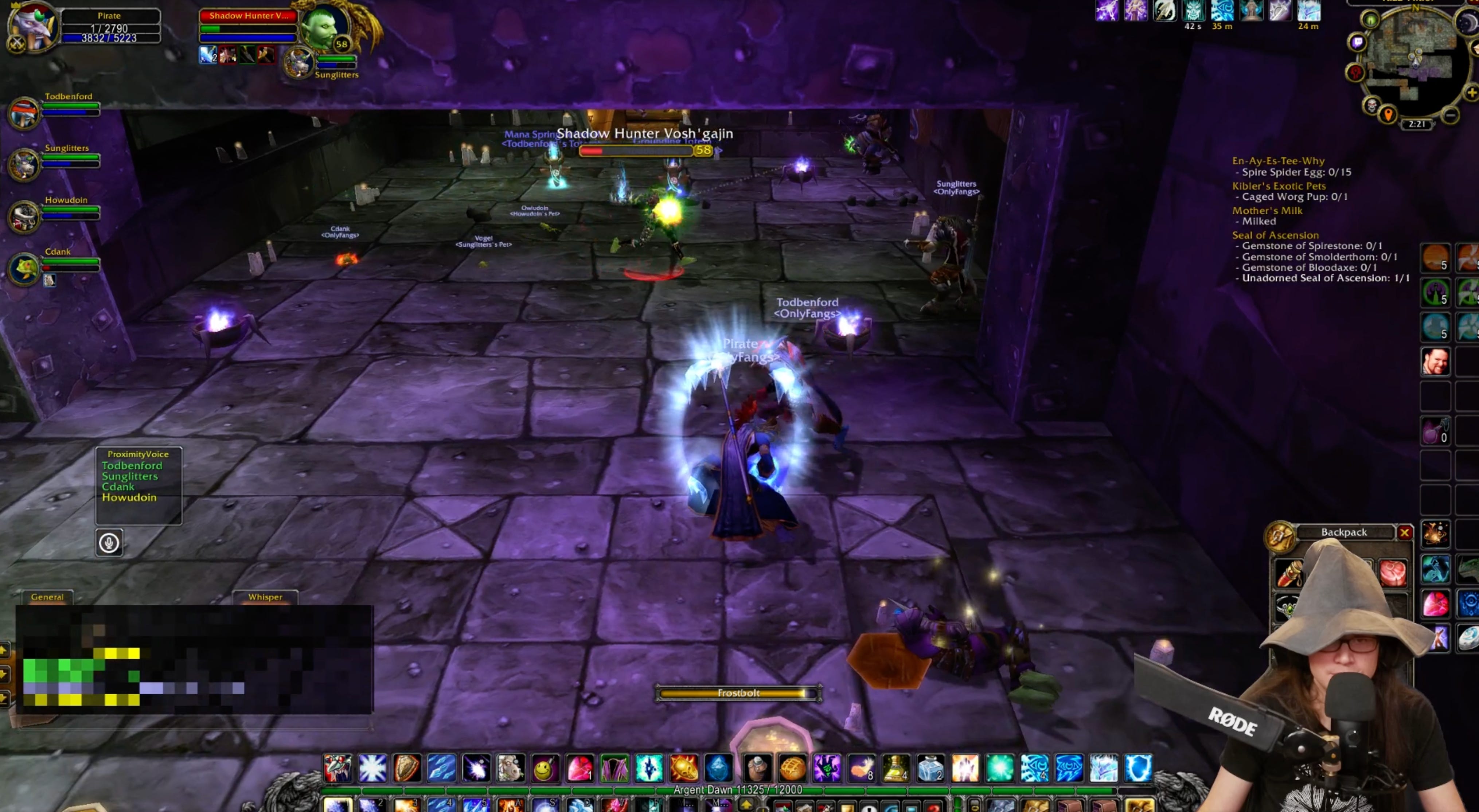
Communities divided
In the days following the event, you can look at PirateSoftware's actions from two different perspectives:
In a high-stress situation, he blanks, gets questioned, and protects himself. They called, “Run! Run! Run!” so he did. Then, thousands of angry people viciously attacked him and his community, which must have been traumatizing and infuriating. It is not strange to double down and keep defending yourself, your employees, and your community.
In a high-stress situation, he only thinks of his own safety, shows no empathy for his team, and cannot see any fault of his own. He has a condescending tone and comes off as arrogant and dismissive, shaking his head on camera when other people speak. He says things that make it clear he feels his character is more important than the rest of his team. From this perspective, ego, main character syndrome, seems to play a big role.
Which way do you lean?
Content, or not?
A lot of people have tried to associate themselves with the drama, making statements to fuel the fire. There are already hundreds of videos covering the events from every point of view. It’s sometimes hard to know what is real and what is just creating more “content”.
But, if it is entertaining, does it need to be real?
Let’s watch some streams!
Are you interested in watching streaming? There are never-ending options, but for World of Warcraft in particular, I’d recommend checking out Xaryu or Anniefuchsia on Twitch. They seem to be good people and their communities are positive and welcoming.
Was this valuable?
This is a weekly newsletter where I write about personal leadership and becoming your happiest and most powerful self.
If you enjoyed this, then please subscribe here.
— Mattis (Twitter)